The "Big 3" Reasons Garage Doors Fail in Texas
The Silent Killer of Houston Homes
In Houston, the average humidity hovers around 80%. While you’re feeling the "stickiness" outside, your garage door hardware is feeling something worse: oxidation.
Unlike drier climates, Houston’s air is packed with moisture that condenses on cool metal surfaces overnight. This leads to several hyper-local issues:
Rusted Torsion Springs: Rust creates friction between the coils. In our heat, a rusted spring is a ticking time bomb that will eventually snap under the strain of a 100°F afternoon.
Seized Rollers: Standard steel rollers don't stand a chance against Gulf Coast air. Once they rust, they stop rolling and start sliding, which burns out your opener's motor.
The "Swell" Effect: If you have a wooden door in neighborhoods like The Heights or River Oaks, the humidity can cause panels to swell and stick in the tracks.
Houston Pro Tip: Avoid WD-40. In our dusty, humid environment, it actually attracts grime that turns into a "grinding paste" in your tracks. Use a high-quality silicone or lithium-based spray instead.
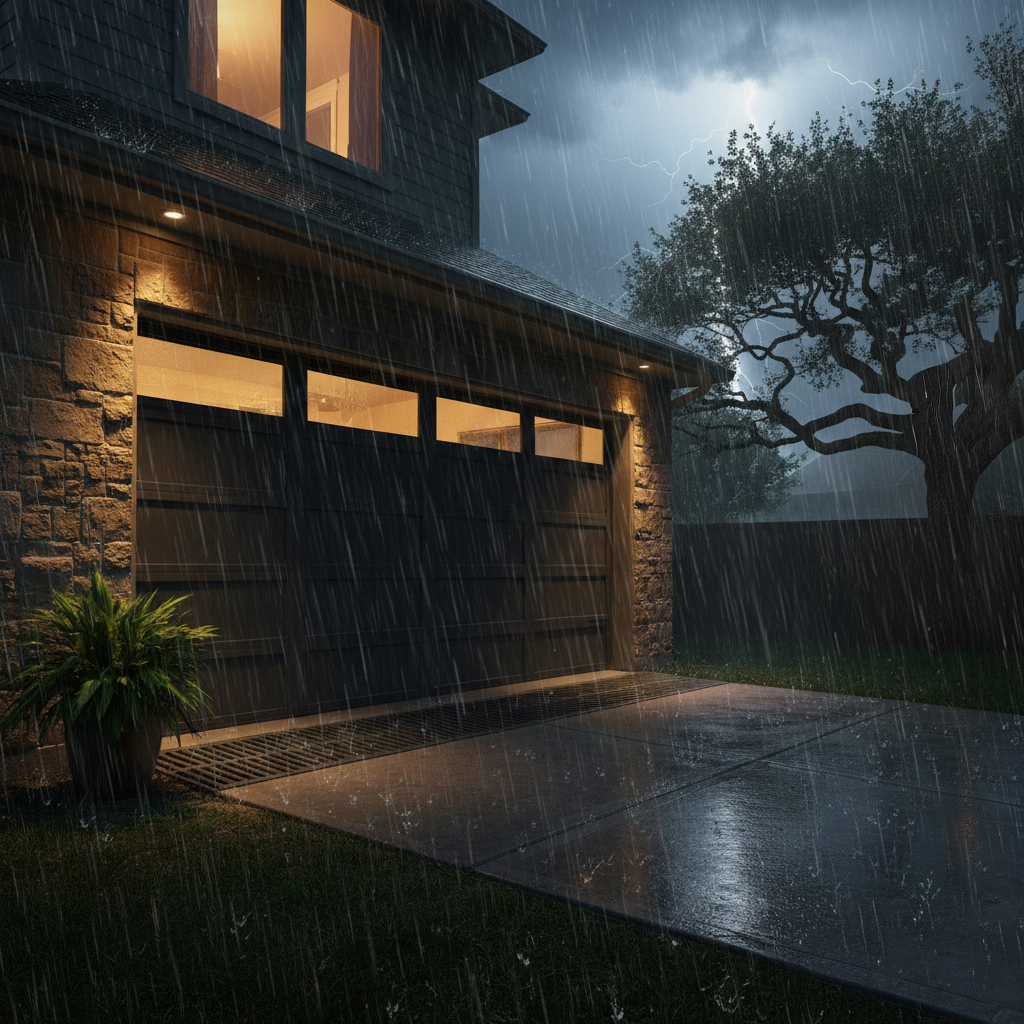
The Largest Vulnerability in Your HomeIn Houston, we don’t just deal with rain; we deal with atmospheric pressure. During a major storm or hurricane, your garage door is the most vulnerable point of entry. It isn't just about the wind hitting the door—it’s about what happens if that door fails.
When a garage door buckles under pressure, air rushes into the home, creating a "balloon effect." This internal pressure can actually push the roof off the house and blow out the walls. In the industry, we call this a Category 1 Failure, and it’s entirely preventable.
1. Understanding "Wind-Load" Requirements
If you live in Harris County or closer to the coast (like Friendswood or Clear Lake), your garage door is subject to specific Wind-Load building codes.
The Reinforcement System: A "Hurricane Rated" door isn't just thicker; it features heavy-gauge steel U-bars (struts) that reinforce the panels.
Impact Rating: High-end doors are tested against flying debris. If a tree limb hits a standard door, it will crumple and allow air to enter. An impact-rated door is designed to stay in the tracks even when dented.
Track Strength: In Houston, we often see doors that are strong enough, but the tracks are pulled out of the wall. We ensure that 14-gauge or 12-gauge tracks are used with extra-long lag screws to bite deep into the home's framing.
2. The Role of the Bottom Seal in Flash Flooding
Houston is famous for flash floods. While a garage door isn't a submarine hatch, your bottom weather stripping is your first line of defense against street runoff.
As the Texas sun beats down on your driveway, it dries out the rubber seal on the bottom of your door, causing it to crack or shrink. This creates a gap where:
Water enters during heavy downpours.
Insects and rodents seek refuge from the heat.
Cool air escapes, driving up your energy bill.
3. Electrical Reliability: The Battery Backup Requirement
Since 2019, many regions have moved toward requiring battery backup systems for garage door openers. When a storm knocks out power in Houston, you don't want to be trapped inside (or outside) your garage.
If your opener is more than 10 years old, it likely lacks a backup battery. We recommend upgrading to a DC-motor system that provides at least 50 cycles of opening and closing even when the main power grid is down.
